A Spiritual Autobiography
A Question and a Challenge
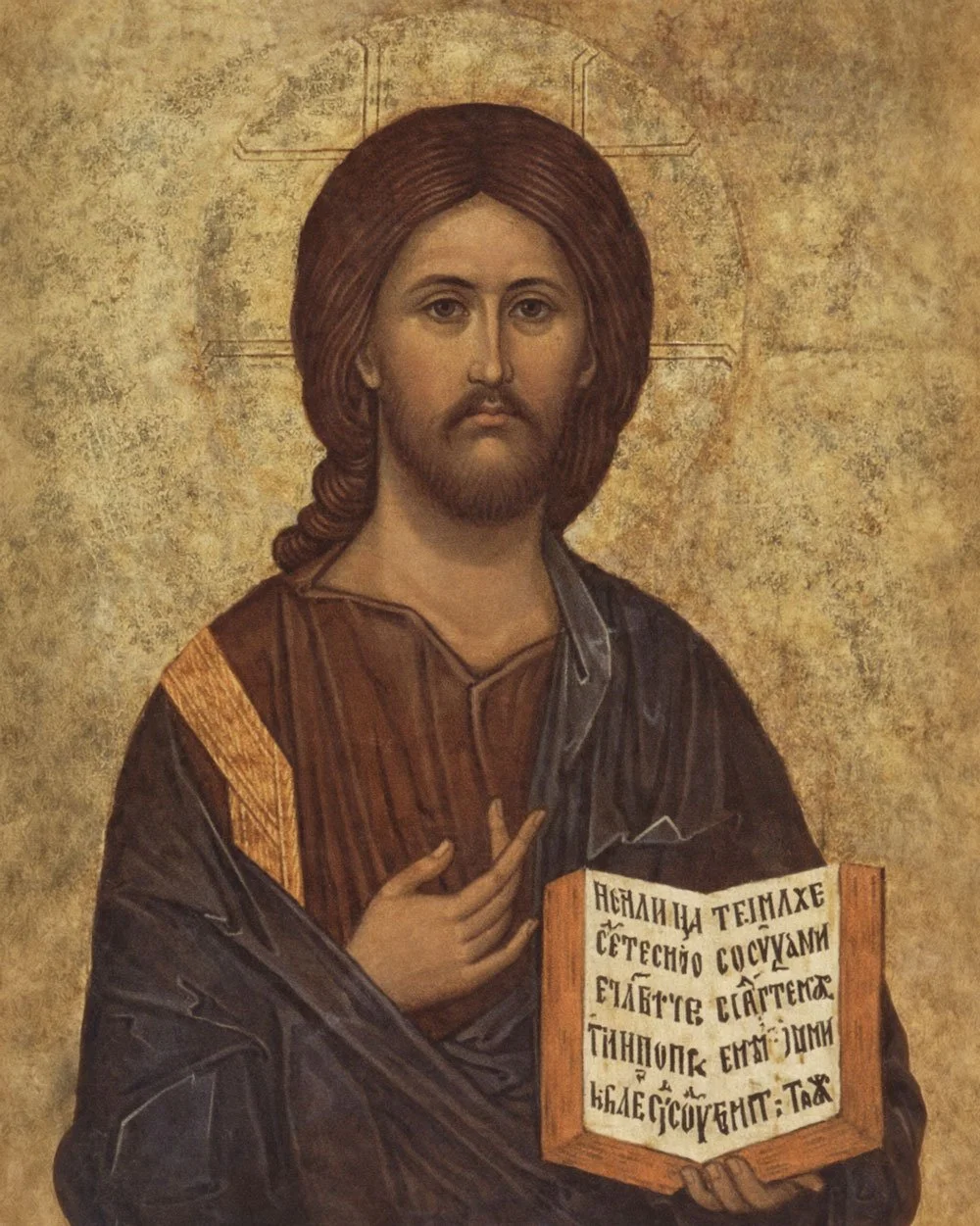
A few years ago, a dear friend in India challenged me to revisit the spirituality and religious practice of my youth, which was Christianity. He knew that I spent decades studying and practising Dharma from the Hindu and Buddhist perspective, as well as the fact that I had completed a master’s degree in Religion and Culture focusing on Christian and Jewish feminist rituals and faith. We had been discussing morning prayers to Shri Ganesh, and I told him I found the prayers he had shared in his most recent video beautiful and inspiring, and that I would like to incorporate them into my own morning meditation.
Prayers to Ganesh are common in Tibetan Buddhism, especially in Nepal, where he is venerated by both Hindus and Buddhists. It was at this point that he suggested I shouldn’t do this but instead add prayers to Jesus to my morning practice.
Since you are born Christian (he wrote), it is but natural that you have got more affection, love toward Jesus Christ (than Ganesh). Listen to the stotra (prayer) but try to see Jesus Christ removing your troubles, your sorrow, and blessing you. See he is helping poor people, orphans, and devotees like us to be on the right path of life. Please see that all your rightful wishes are being accomplished through Jesus Christ.
To be perfectly honest, I was a little taken aback by his suggestion.
For many years, I had felt alienated from the Church. I was frustrated with people trying to force their views and judgments on me during a very stressful time in my life, and just gave up trying to conform to what I thought was an unrealistic lifestyle for me at the time. Suffice it to say that I felt as if the tradition that I loved as a child and as a teenager was lost to me, except as a tradition to be studied from a cultural point of view as an academic.
I also had to admit that I had always felt a conflict about this situation. I don’t think that I have ever really left the simple faith I had in Jesus as a child, but there certainly had been a disconnection from the Christian community or a life of Christian prayer. I did have a deep respect for Jesus, even though I had spent so many years considering myself a Buddhist.
Prakesh’s challenge after our discussion about Shri Ganesh reminded me that when HH Dalai Lama visited Canada and was asked about the number of Westerners turning to Buddhism, he said that it would be better for them not to convert to Buddhism.
In his Buddhist lessons, the Dalai Lama often warns Westerners not to embrace a religion like Buddhism too quickly. It is better to be faithful to the religious culture in which one has grown up. Of course, Westerners are free to study and practise Buddhism, but only after a thorough study and initiation should one convert to Buddhism. There is no pressure to make converts in Buddhism.
At the time, I felt that his warning didn’t apply to me. I was sincere in my study of Buddha dharma and gave myself to it with an open mind and a pure heart. I thought that it was the best path for me to take at the time, and so I went through the process of taking refuge in The Three Jewels (The Buddha/Teacher, The Dharma/Teachings, and The Sangha/Community) and then taking the further step of accepting the life of a Buddhist monastic.
My dear friend’s suggestion had come at a time, however, when I had already spent the past few years drifting away from the monastic life. Even though I had made a very inspiring pilgrimage to the five holy sites of Buddhism in Nepal and India, I was reconsidering the decision to become a Buddhist monastic and had in fact stopped wearing my robes. My friend’s suggestion to direct my prayers to Jesus threw me right back into the conundrum that had followed me since I was a child. Once, in an interview with a Buddhist mentor, when we were discussing my background as a Christian, I was told that when one takes vows to pursue the development of compassion and wisdom, one never abandons their deepest roots of virtue but honours them by letting them nourish Buddhist practice as it is growing in the present. She too, although she was a Buddhist, agreed with my friend Prakesh, that Jesus was that deep root.
In a sense, this is exactly what this blog is about. Keeping an open mind. Making room for change as I engage in an honest review of my life so far. Looking for a place to call home. Asking the right questions. Who are my people? How did their lives influence or shape the person that I am today? What were their spiritual influences, and did any of them pass anything of value onto me? Honouring your ancestors, it has been said, is as good a place as any to start any spiritual quest. In fact, for me it turns out to be the best place to start.
These questions were ones that I must have been anticipating for a very long time, because over the years I had been studying my family’s roots and had even gone so far as to subscribe to an online genealogical database to start working on my family tree. One of the interesting things that I discovered is that census forms contain much more information than birthdays and the number of persons in a particular household. They also include the profession or trade of the people in the family, as well as their religious affiliation if they have any. It was in these government documents online that I discovered quite a lot about my family’s religious heritage. Better than that, however, has been the enjoyable process of sharing candid and sometimes very poignant conversations with elders within the family, especially my father and mother. It has been through these sources that I have been able to piece together a simple history of our religious affiliations and spiritual traditions. It is my hope to share some of what I have found by writing this blog.
My Scottish and Geordie Protestant Roots and “Temperance” as a Way of Life
It has been interesting to learn about my grandparents and their ancestors. On my mother’s paternal side, everyone is solidly Presbyterian back several generations to their roots in Leith, Scotland. I have traced this family line back as far as 1801 and would have to make another trip to Edinburgh to search church records to get further back than that. My mother’s maternal family were from Newcastle Upon Tyne, and they were Methodist. In fact, my great grandfather Matthew Wright was a Wesleyan lay teacher and youth pastor in Newcastle before he emigrated to Canada in 1911. We have in our family archive several letters “from home” written by his friends and colleagues describing how much they have been missing him since he left England, and how his Sunday School students had been asking after him. I was lucky enough to travel to Newcastle in 1992 and found the church where they worshipped and the home that they lived in before moving to Canada. Both my grandfather Matthew and his wife Martha were members of a benevolent temperance society called the Independent Order of Good Templars. The IOGT, a fraternal organisation that encouraged temperance or total abstinence from alcohol, was founded in 1850 and modelled on the ritual and regalia of the Freemasons. It was unique in that it admitted both men and women and did not exclude anyone based on their race. I am happy to say that I have both Matthew and Martha’s certificates and some of their belongings, and that my elder sister, who is now a minister in the United Church of Canada, has some of their hymnbooks and one of their Bibles.
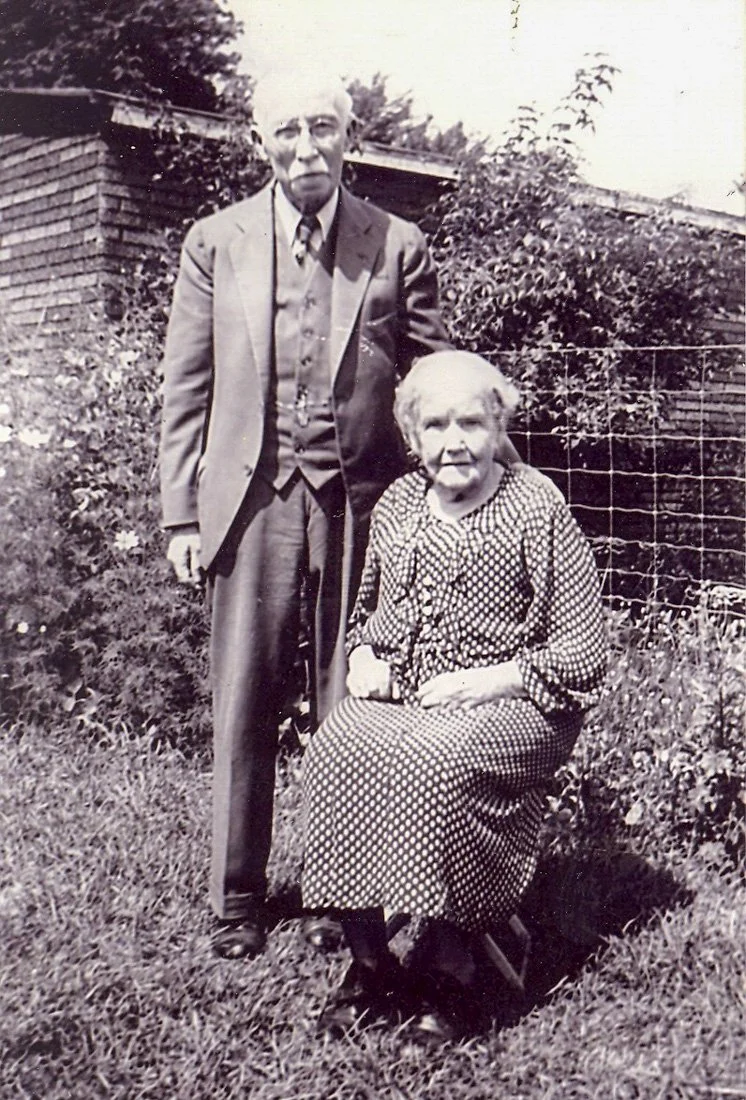
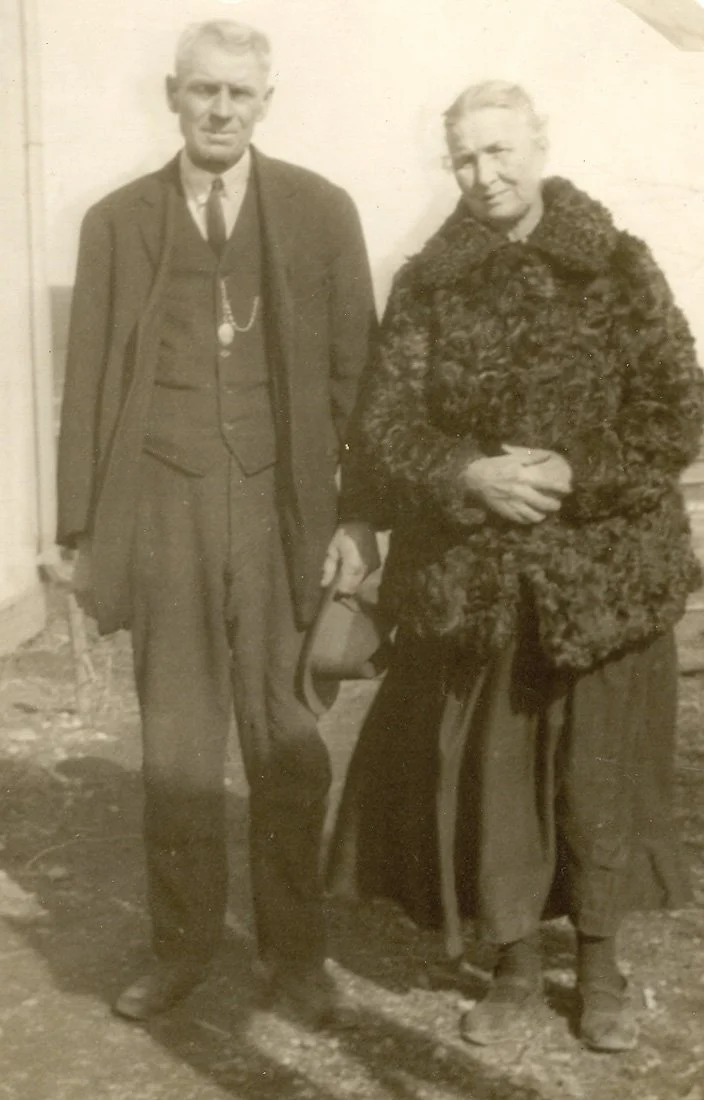
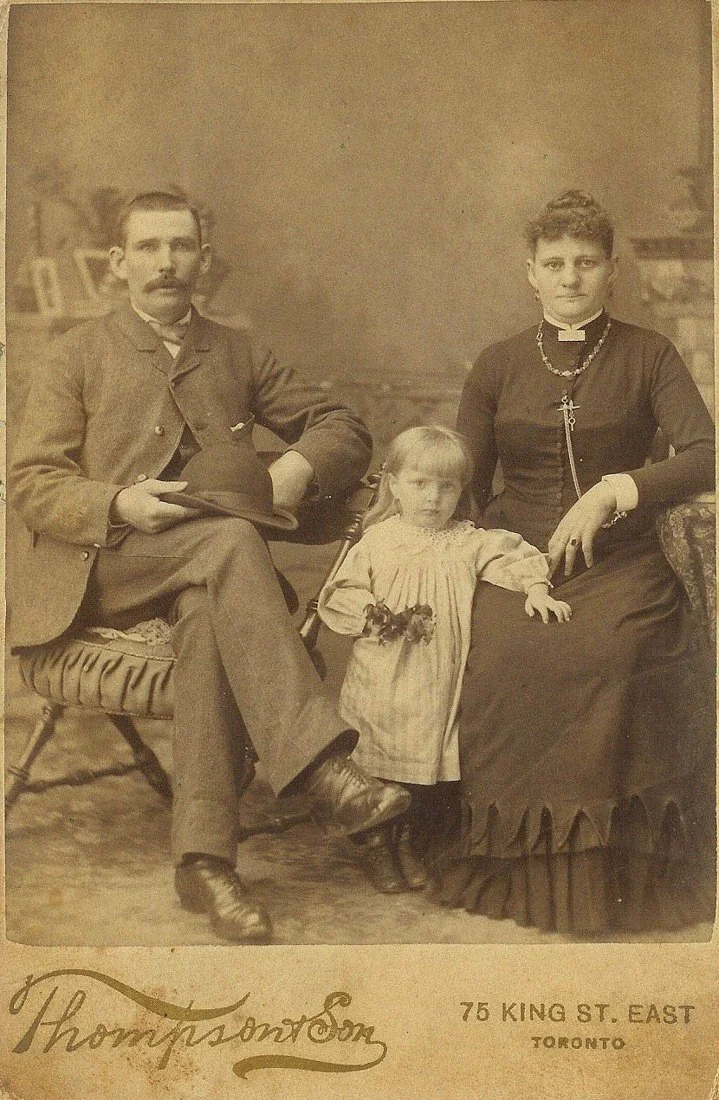
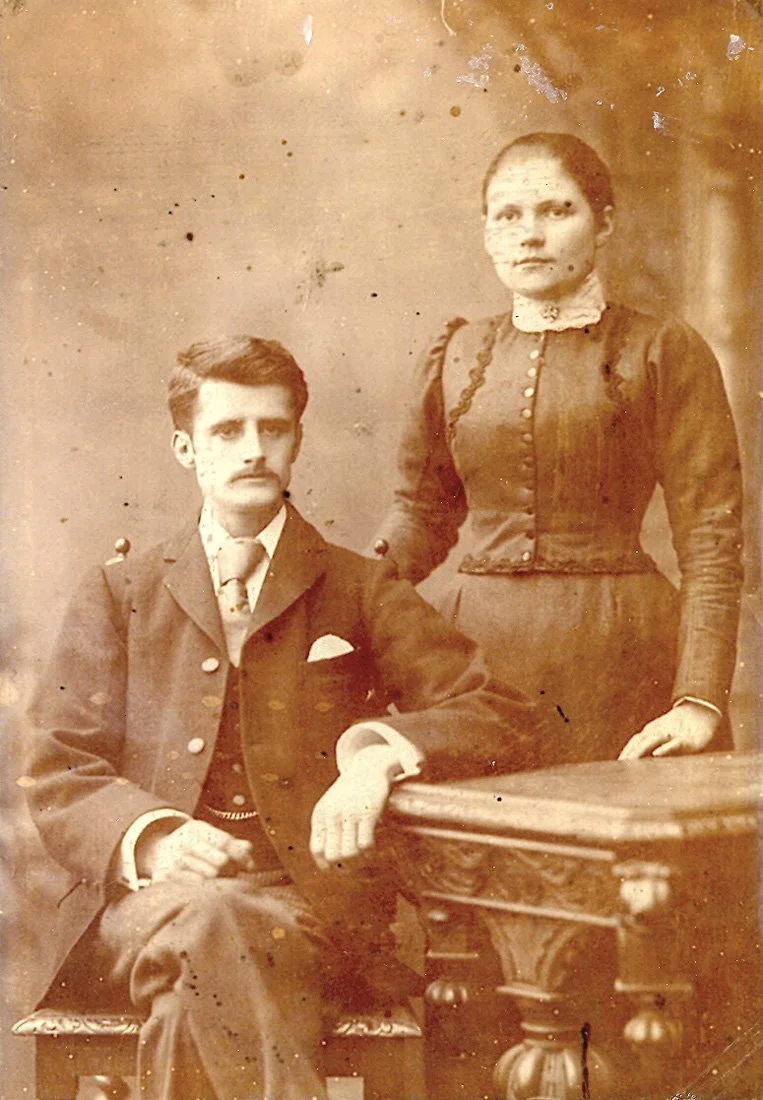
The consumption of alcohol was forbidden in my mother’s paternal grandfather’s very strict Presbyterian household as well. My grandfather served overseas in France during WW I, enlisting when he was only 17 years old. When he returned after the war, he admitted to drinking with his chums to deal with the harsh conditions of trench warfare, but even this was no excuse according to my great grandfather, and the drinking of alcohol was always severely frowned upon. Temperance was so much a part of the family’s religious practice that no one ever dared to bring spirits into my grandparents’ house until my father arrived one Christmas with the proverbial bottle of Canadian Club Rye Whiskey. After all those years of abstinence, my Pop, forty years after returning from the war, asked my father for a sip. William Mitchell Clark (1860-1949) and Emily Scobel Ballantyne (1856-1944) Hamilton Ontario Canada. My maternal great grandparents were Scottish Presbyterian and their son, my grandfather Percy Clark, was a member and an elder at Knox Presbyterian Church in Burlington Ontario where my mother was a member until her marriage and moved to Galt Ontario and joined Central Presbyterian Church there with my father.
I knew that trying to tease out my father’s religious background and heritage was going to be a little more complicated than the one I wrote about earlier concerning my mother’s straightforward church affiliations. It has taken some interesting and animated conversations with my 80-year-old father and his 74-year-old sister, but I think I finally have a pretty good idea about the Bush side of the proverbial religious tree.
David Bush was born on board a ship en route to New York from Paris, France in 1818. By 1854 he was residing in Montreal Quebec. The census data from 1871 says that he was of French origin. I had heard growing up that he was most likely of Huguenot background, that is French Calvinist Protestant, and that their name had been changed from Boucher to Bush once they landed in the USA. If their name was Bush, however, they might have hailed from Alsace Lorraine where a German/French mix was common. David Bush died in 1914 at 97 years of age.
Today, I heard another story entirely from my aunt that is interesting. Apparently, one of Great Great Grandfather David’s sisters was a Catholic nun who lived in a cloistered community somewhere in New York. At some point in her career as a “Sister”, some scandal within the Catholic Church caused her some concern, and when she left the convent to return to her family, she “spilled the beans”, which caused the rest of the family to turn their backs on all thing papish and convert to the Protestant faith. This branch of the family moved from New York to Vermont, then to Quebec, and then finally to Collingwood Ontario to follow work related to shipbuilding on the Great Lakes.
Hiram Webster Bush was a tinsmith who worked on the ships fitted and sailing from Collingwood. He was one of ten children and my father’s grandfather.
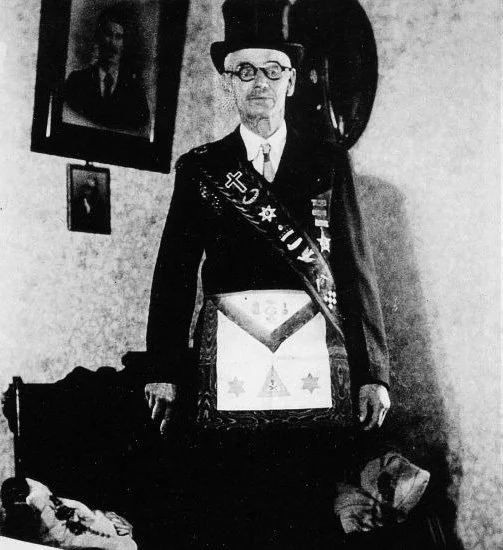
He and his wife Emmarilla Merchant were Church of England. They attended All Saint’s Anglican Church in Collingwood Ontario. They had six children. Hiram was active in many fraternal organizations, including the Freemasons and The Independent Order of Foresters.
Hiram’s son, my grandfather Archibald Franklin Bush, was born in Collingwood in 1897. He married my grandmother Elizabeth Parker in September 1923 at St. Albans Church, Toronto Ontario. The Parker family, as will be introduced in my next post, were Plymouth Brethren and Gospel Hall, and it was into this denomination that my grandfather transferred his affiliation when he married “Lizzie” and chose to raise his own family of eight children in Burlington Ontario, including my father, Graham.
I Have a Goodly Heritage (Psalm 16:6): A Personal Awakening and the Gospel Hall
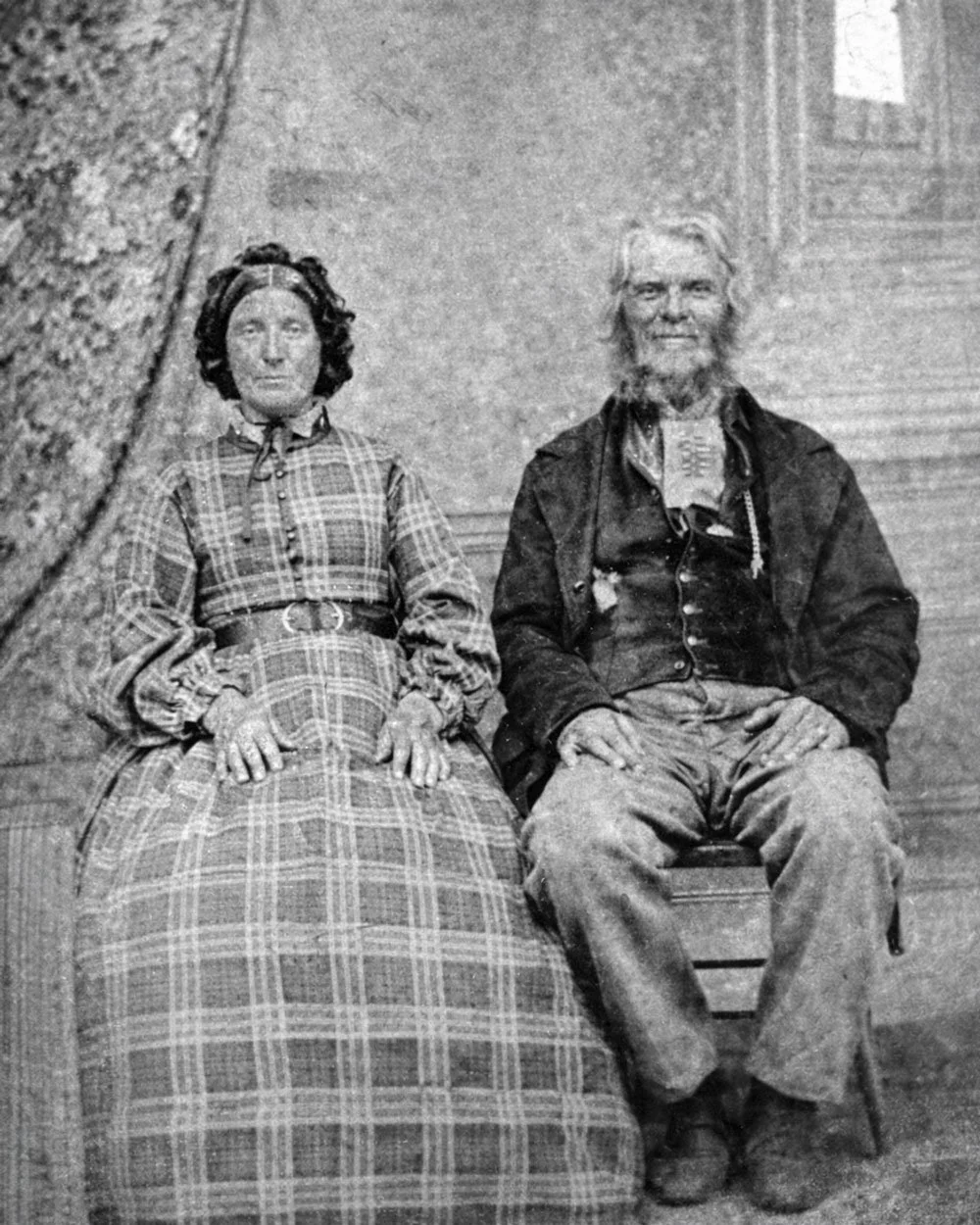
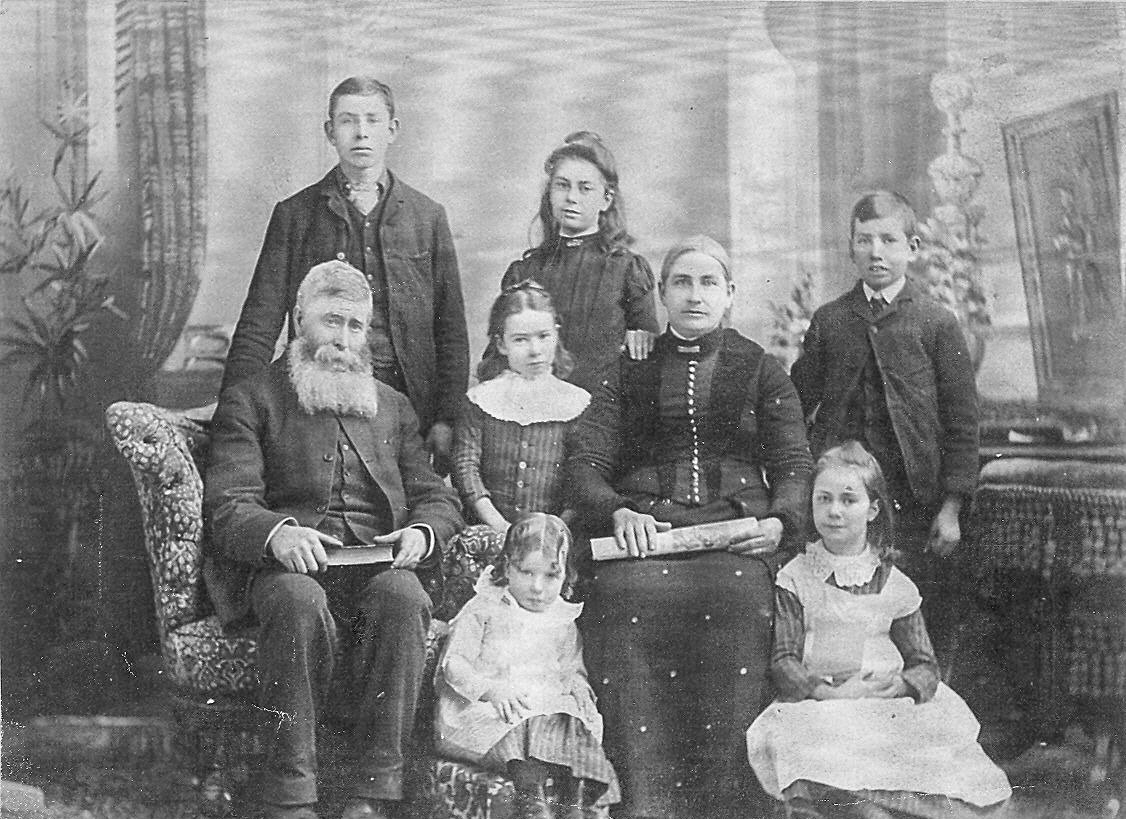
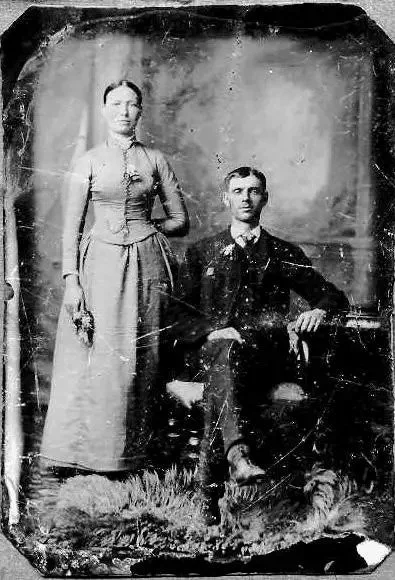
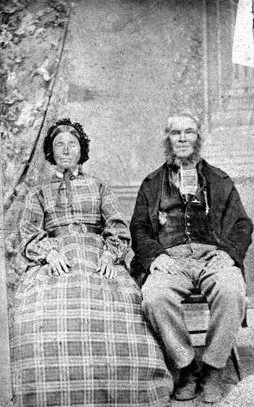
The oldest photograph I have in my family album is of “Royal” George Leonard (1810-1887) and his wife Maria French (1816-1878) who both emigrated to Canada from England and settled in the Georgian Bay area of Ontario. “Royal George” appears to be some kind of family nickname. There is some speculation that George or his father served on a British Naval Vessel named the Royal George. George’s grandson also used the nickname “Royal George” (1863-1932). George and Maria were members of the Church of England. They had 11 children. Their first child Sarah Jane Leonard (1837-1908) married William Parker in Trinity Anglican Church, Barrie Ontario in 1857. Sarah and William had 7 children. Their son William Thomas Parker was born in 1869 and as far as I can determine it was William who broke away from the family’s long-time association with the Church of England to worship with Christians who felt that the traditional church had moved too far away from scriptural practices and gathered in fellowships reviving the New Testament simplicity of the Gospel Hall. William Thomas Parker was married to Lucy Emma Brock in the Waverly Gospel Hall outside of Midland Ontario in 1894. I have just discovered from an old newspaper clipping that he became a preacher in this denomination.
The Brock’s were a long established and well-known military family distinguished in the War of 1812, and before that as Loyalists to King George fighting against the “revolutionaries” in the American War of Independence. Originally from Fishkill New York, they received land grants that settled them along the north shore of Lake Ontario and then in Simcoe County on the shores of Georgian Bay. The Brock family were also adherents of the Church of England.
For some folks, even the radical views of the Wesleyan Methodists were not sufficient to ensure them that they were following the example and practices of the New Testament church. The Gospel Hall movement without an ordained clergy or ministerial hierarchy provided an even more scrupulous personal commitment to a simpler practice, a more Bible based doctrine, and an emphasis on the equality of all believers (albeit a qualified equality as women would have always held a secondary role in this group and never as a teacher except for children). It was into this fellowship that my grandmother Elizabeth Edna Parker, the daughter of William Thomas and Lucy Emma, was born.
Of all my ancestors, it is my Grandma Bush who I felt the closest to as a child. She was the typical loving matriarch of a very large family of aunts, uncles, and cousins. She was a prayerful disciple of Jesus, and it was in her home that I felt the expression of Christianity in its most loving and prayerful form. Her bright eyes, beaming smile, and warm hugs enriched my childhood like no other.
Her simple faith in Jesus and her trust in God’s forbearance and mercy towards “His” children were a very strong influence in my life as a child. My Grandfather, on the other hand, was the stern and very strict Christian patriarch who embraced his adherence to the principles of a very conservative evangelical Christian movement, the Plymouth Brethren, like a shield against all “sinners.” In the most conservative of these fellowships, even instrumental music was frowned upon, as was participating in local or federal politics or any other “worldly” concerns. Luckily, my grandfather did not extend his allegiance to the prohibition against music. Their house was full of the singing the of hymns and rousing choruses with the accompaniment of a much beloved piano. My grandfather also played the violin. Sunday, however, meant attending three church services and no work. For my grandmother, that meant preparing a cold ham supper which I remember well, and no games or frivolity unless they incorporated reading Bible stories or reciting scripture. No movies, no make up, no fancy immodest clothes.
Bible verse plaques and even photos of great radio preachers like Billy Sunday and Billy Graham adorned the walls. In the dining room, one plaque announced, “Christ is the unseen guest at every meal and the silent listener to every conversation” and above and behind my grandfather’s chair in the living room another pronounced, “As for me and my House, we will serve the Lord Joshua 24:15.” Suffice it to say that the house that my father grew up in was ruled over by a strict, somewhat overbearing father but tempered by a sensible and very loving mother.
When my father was 16 years of age he and refused to go to church on a Sunday, causing my grandfather to chase him around the house, grab him by the scruff of the neck, and give him a proper beating. My father told me that he was not against going to church per se, but that he wanted to choose the time and place where he felt comfortable and could study the Bible in a more open and relaxed atmosphere. The church that my grandparents attended for many years was the Freeman Gospel Tabernacle on Brant Street in Burlington Ontario.
My father’s parents certainly provided quite a stark contrast in their expression of Christianity and how it might look to a child. Because of their differences, I loved my grandmother dearly and feared my grandfather just as much. Memories of sitting with my grandmother playing checkers, listening to Tennessee Ernie Ford singing hymns and gospel songs on the record player, or reading the Psalms with her at the table still warm my heart. She gave me several of these Gospel phonograph albums that I cherish to this day. The relationship with my grandfather was distant and restricted to short queries about how school was going. At his funeral, Bible verse tracts and invitations to follow Jesus were given out to those who attended. A rousing sermon was part of the service.
My Mother’s Church and Marriage: Family life
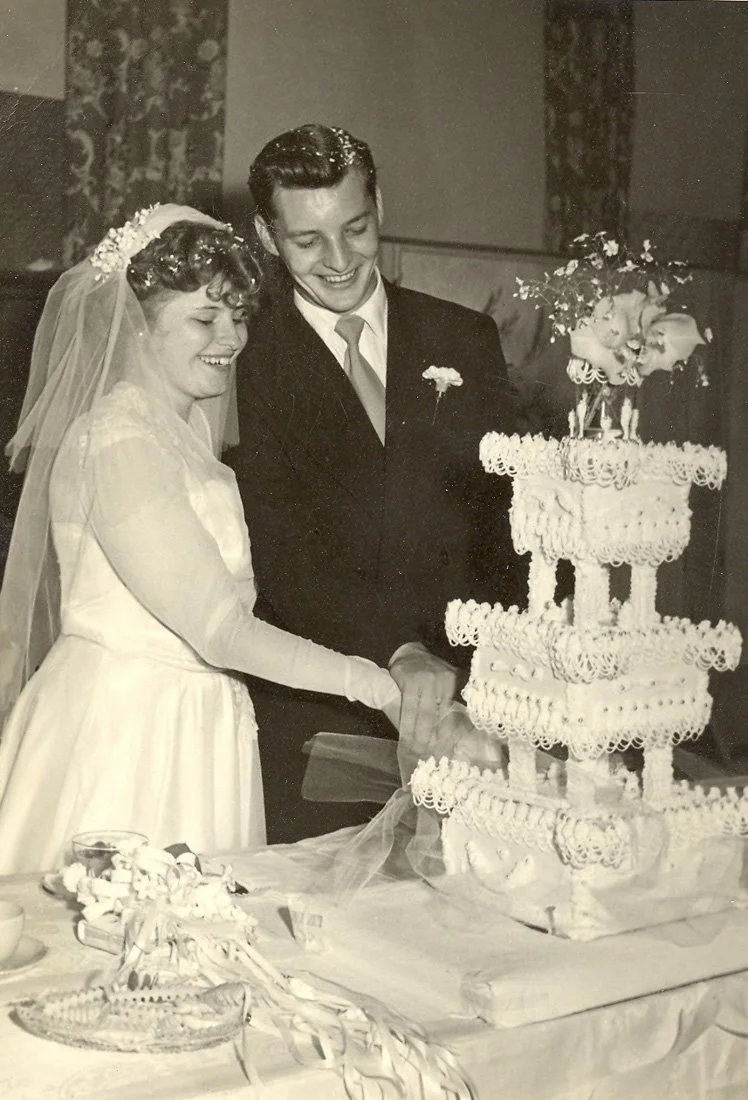
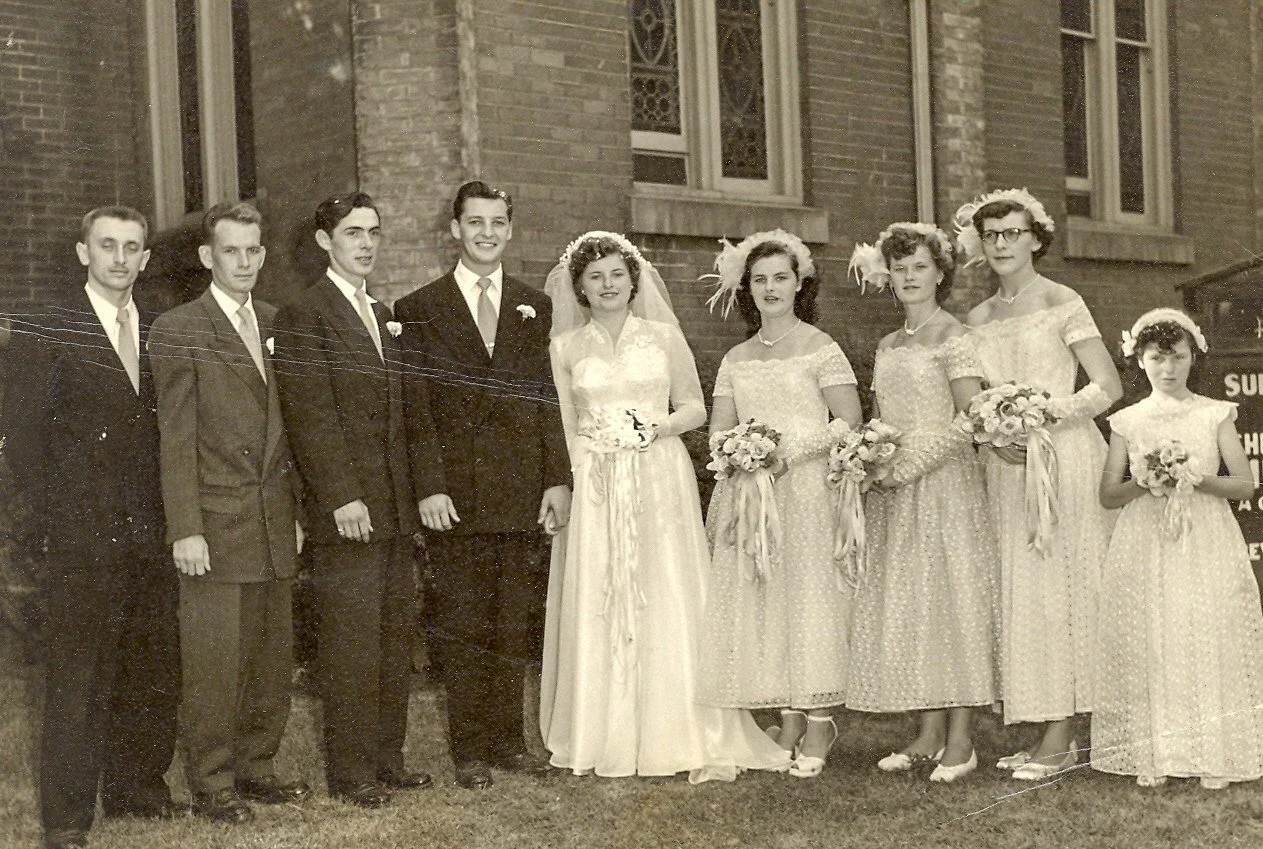
My parents were married in Knox Presbyterian Church in Burlington Ontario in August 1952. This was my mother’s family church where her father Percy Clark was an elder and most family members attended regularly. One of my aunts was a lifelong member of the choir there. My parents were married in this church in Burlington Ontario in August 1952.
Many of my maternal cousins were baptized in this church and all family funerals were held there. Church life was an important aspect of my mother’s upbringing. Even though this was not the church that I attended, I was familiar with the Minister there, Reverend Harold Lowry, and always felt part of the long-time family connection to this congregation.
After my parents were married, they moved to Galt Ontario (now Cambridge) and became members of Central Presbyterian Church in that city. My elder sister Jan, myself, my brother Douglas and my younger sister Carol were all baptized in this church and attended the Sunday School there. My mother taught Sunday School, and my father became an elder in this congregation.
Going to church was a part of my childhood and dressing up for Sunday School and church was a very serious affair with the inclusion of white gloves and hats, even for the children. I was notoriously messing up my clothes and getting my gloves dirty on the way to church so that it was customary for my mother to carry an extra pair in her purse to provide me with clean ones if needed before we entered the church. How we looked and behaved at church was a major source of concern for my parents during our early years. An adherence to decorum and tidiness was an expectation of the church and within my family at this time. Congregational singing was an important part of the service and I remember enjoying very much.
It was at this Church that my father was ordained as an elder within the context of the Presbyterian organization of congregational life. The position of elder was a lifelong lay ordination and is in fact the source of the name of the denomination as the Greek word for elder is πρεσβυτερος [presbyteros] and in English presbyter. Presbyterianism originated primarily in Scotland and the Scottish Reformation during the formal break with the Roman Catholic Church in 1560. Although there are differing theological approaches within the Presbyterian denomination, Calvinism is the primary tradition within this church which emphasizes the sovereignty of God, the authority of the Scriptures, and the necessity of divine grace through faith in Jesus Christ. Each local congregation is governed by Sessions made up of representatives of the congregation, or elders. Elders are lay people who are chosen to take part in local pastoral care and decision-making at all levels. It was into this role that my father stepped when he became a member of my mother’s denomination. It was a serious commitment for those who received this calling.
I was baptized (as were my sisters and brother) as an infant at Central Presbyterian Church with Dr. David Goudy officiating. I was confirmed in St. George United Church, St George Ontario by Rev. Gordon Hoult as a member of the United Church of Canada (a union church that was formed by Presbyterian, Methodist, Congregationalist congregations in 1925) in 1968 when I was 13 years of age.
Albert Schweitzer and the Search for the Historical Jesus
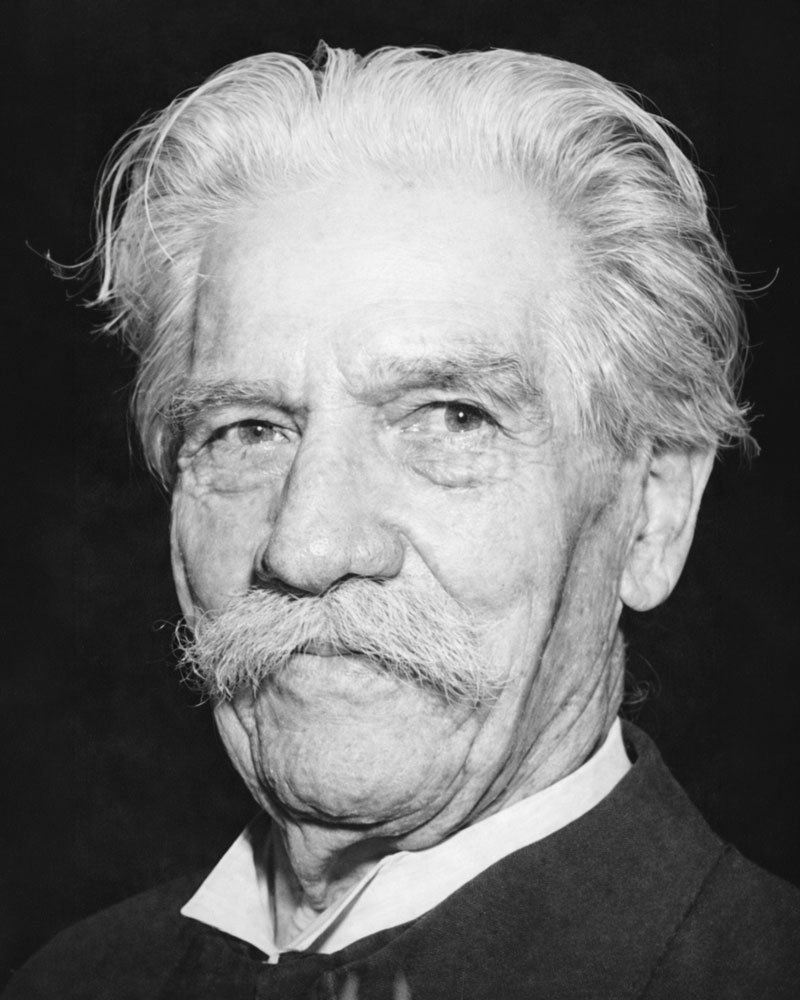
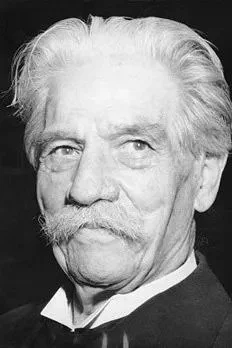
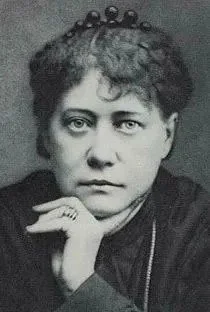
It was during these early years of my father’s association with this church that he came into conflict with the traditional Christian doctrines and started to explore alternatives. When I asked him why he decided to resign his position as elder in the church, he said that he had reservations about professing something publicly that he did not believe in unconditionally and so, with good conscience, he made the decision to disassociate himself from the church. The minister had presented a sermon one Sunday morning concerning the Gnostic traditions which had been rejected by the early church as heretical. Apparently, my father got into a heated debate with the minister about the legitimacy of some gnostic views and was then challenged by the reverend about whether he believed in Jesus Christ. My father said that he answered yes, but that he also believed in the teaching of the Buddha and did not find them to be contradictory. When I asked my father how he had come to these conclusions, he replied that he had embarked on a personal study of Christian origins. One of the books that he read was The Quest for the Historical Jesus, by Albert Schweitzer, that was published in English in 1910. He also read another controversial essay by Rudolf Karl Bultmann, “New Testament and Mythology,” 1941, which my father said influenced him to take a less orthodox view of his family’s very traditional one. Once my father set off on his exploration of Christian “mythology” and the esoteric Gnostic Gospels, he was drawn to the study of other world religions. He delved into the cross-cultural and voluminous works of Helena P. Blavatsky and the Theosophical Society and became a member and attended meetings of this group. It was through this influence and the Theosophical tenet that “There is no religion higher than Truth” that my father then began his studies in Hinduism and Buddhism. He built up a rather extensive library of religious books and texts from many different traditions.
Three books that I remember specifically that had an early influence on my life as a ten-year-old child with access to my father’s library were Mythology: Timeless Tales of Gods and Heroes (1942) by Edith Hamilton, The Teachings of the Compassionate Buddha (1955) by Edwin Arthur Burtt, and the Bhagavad Gita, an important Hindu text.
It is a testament to my father’s open mind and attitude toward our religious upbringing that even while I was still expected to go to church and attend Sunday School, I was also encouraged to read these books and others like them. I was never barred from asking questions concerning anything that I discovered. Often at the family dinner table my older sister and I were queried about our reading and expected to discuss it thoughtfully even though we were still quite young. I was particularly enthralled by the beautiful images of Krishna in the illustrated version of the Bhagavad Gita. I was told to handle it carefully as it was an older book with gilded edges. What I loved about The Teachings of the Compassionate Buddha was that it contained stories that even a child could understand. They were like the parables and Bible stories I was learning in Sunday School about love and compassion toward others.
However, it was Edith Hamilton’s book discussing Greek mythology that changed my outlook on religion and spirituality forever. It was if a door was presented to me that once opened could never be closed again. On the cover was a painted reproduction of a very famous sculpture of Perseus holding up the severed head of Medusa. Not exactly a pleasant image for a ten-year-old to be contemplating; however, it wasn’t the grisly nature of the cover but the contents of that book that captured my attention. It was the moment that I realized that these “myths” provided the narrative elements to what would have been the religion of the people of Greece at that time. It was as if a light went on in my mind, although as a child it felt more like an electrical shock. I can remember shaking my head and thinking that the stories from the Greek world might be equivalent to the stories I was reading in the Bible. When I talked to my father about this, he assured me that yes, this was how the readings should be understood. It was then that I realized that there were other world views that were different than the Christian one I had been raised in. I have no recollection of what my more traditional mother thought about these conversations. She continued to go to church and participate in charitable projects they sponsored. What this meant and how it would impact my life and the course of my spiritual development when I was older was not clearly apparent for many more years, but I distinctly remember this as a significant turning point.
Both of my parents were extremely influential in the way that I looked at the world and what I thought about my place in it. My mother’s involvement in community charity programs and her work in the Sunday School with children taught me the importance of active compassion and a commitment to generosity and kindness. My father’s journey as he moved away from his religious training through his independent study into world religions and the different approaches to the philosophical questions he was exploring about life, and the nature of human spirituality encouraged me to keep an open mind and to not be afraid to ask questions. I always knew that I was surrounded by a large and loving family of Christian believers on both sides of the family tree. I had the benefit of a very strong grounding in the Christian faith with many years of Bible study and participation in charitable church activities and projects. A consciousness of the suffering of others and a compassion for them came from my mother’s deep commitment and love for the teachings of Jesus Christ. As a mother and as a Sunday school teacher she was able to show us just how the stories in the Bible were applicable to our lives. I am very grateful for all that I have received from her association with both the Presbyterian and United Church. I would add the influence of my paternal grandmother’s approach to her prayerful life of relationship to Jesus as well. The Bible became a much read and cherished book in my own library and for years was the centre of my prayer life. It gave me an acute sense of justice and compassion for others which in turn inspired me to pursue the study of theology at university for a bachelor’s as well as a master’s degree in social gospel, liberation and feminist theology, and ritual studies. But without doubt the influence of my father and his studies of the sacred scriptures of both Hinduism and Buddhism had such an effect on me that I felt compelled to study and practice them myself.
I am not saying that this has been an easy marriage between the two paths; however, it has been a life’s goal to see the similarities between Christianity and Buddhism particularly and to live a life that reflects the finest of both traditions. As the abbess at the monastery where I lived for awhile said, Jesus is “the root of virtue” I learned at my mother’s knee and Buddhism is the path I have chosen to express it. This may sound contradictory, but it is how I have come to terms with how I would like to express my spirituality. Some would say that they would negate each other since both have significant differences and require adherence to vows and practices that demand making a choice. I don’t participate in Christian activities but accept that they have had an influence in my spiritual formation.
It is my hope that this spiritual autobiography has answered my Hindu friend’s question about how a Canadian woman with deep roots in the soil of Christianity through church and family found herself becoming a lay person and then a monastic with a deep commitment to Buddhist teaching and practice. It probably raises many more questions than it answers, but this is why I have started this blog, to explore religion and its influence on my life and to perhaps engage others in the discussion of these questions.
Gallery: